

<!doctype html>
bird netting installation?
How to Keep Pigeons Away From Your Apartment Balcony Naturally (Bird Netting)
Humane, low-cost and effective strategies to make your balcony unattractive to pigeons — including why bird netting is the safest permanent solution.
Quick Summary
Why pigeons choose balconies
Pigeons look for three things: food, shelter, and safety from predators. Balconies in apartments easily provide those—especially in cities where people leave food, clutter, or open bins.
- Easy food sources: leftovers, crumbs, and open trash.
- Sheltered ledges for roosting and nesting.
- Low human disturbance in some high-rise corners.
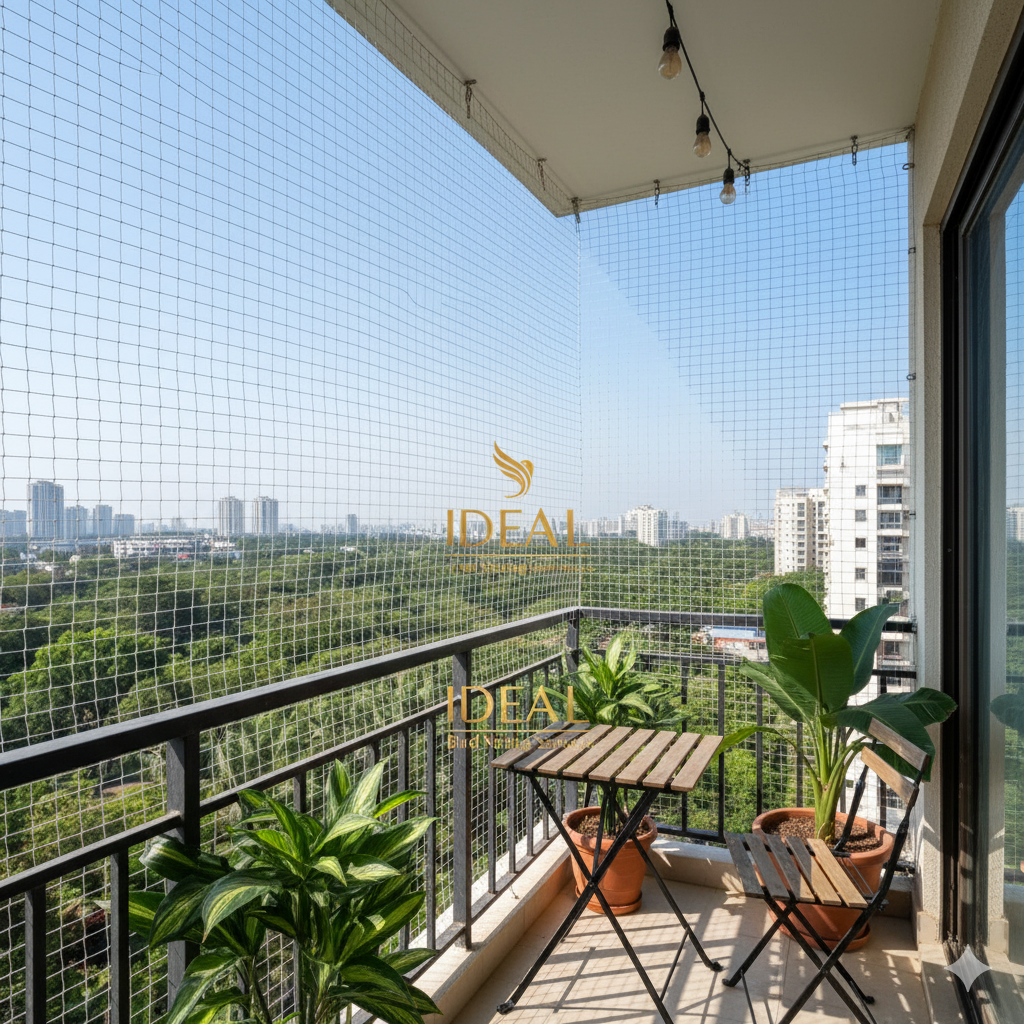
Bird Netting Services Pune
1. Remove food sources (First step)
Make your balcony unattractive by removing everything that might feed pigeons. This is the single most effective initial step.bird netting installation?
- Never leave pet food or human food outdoors.
- Keep bins sealed with tight lids, and wash them regularly.

How to Keep Pigeons Away From Your Apartment Balcony Naturally (Bird Netting) - Clean spills and sweep crumbs immediately.
2. Keep the balcony clean and clutter-free
bird netting installation?
- Remove boxes, unused furniture and tangled fabrics where pigeons can hide.
- Dry damp corners — pigeons avoid very dry, exposed places.
- Inspect for nests and remove only when chicks have left (local wildlife rules may apply).

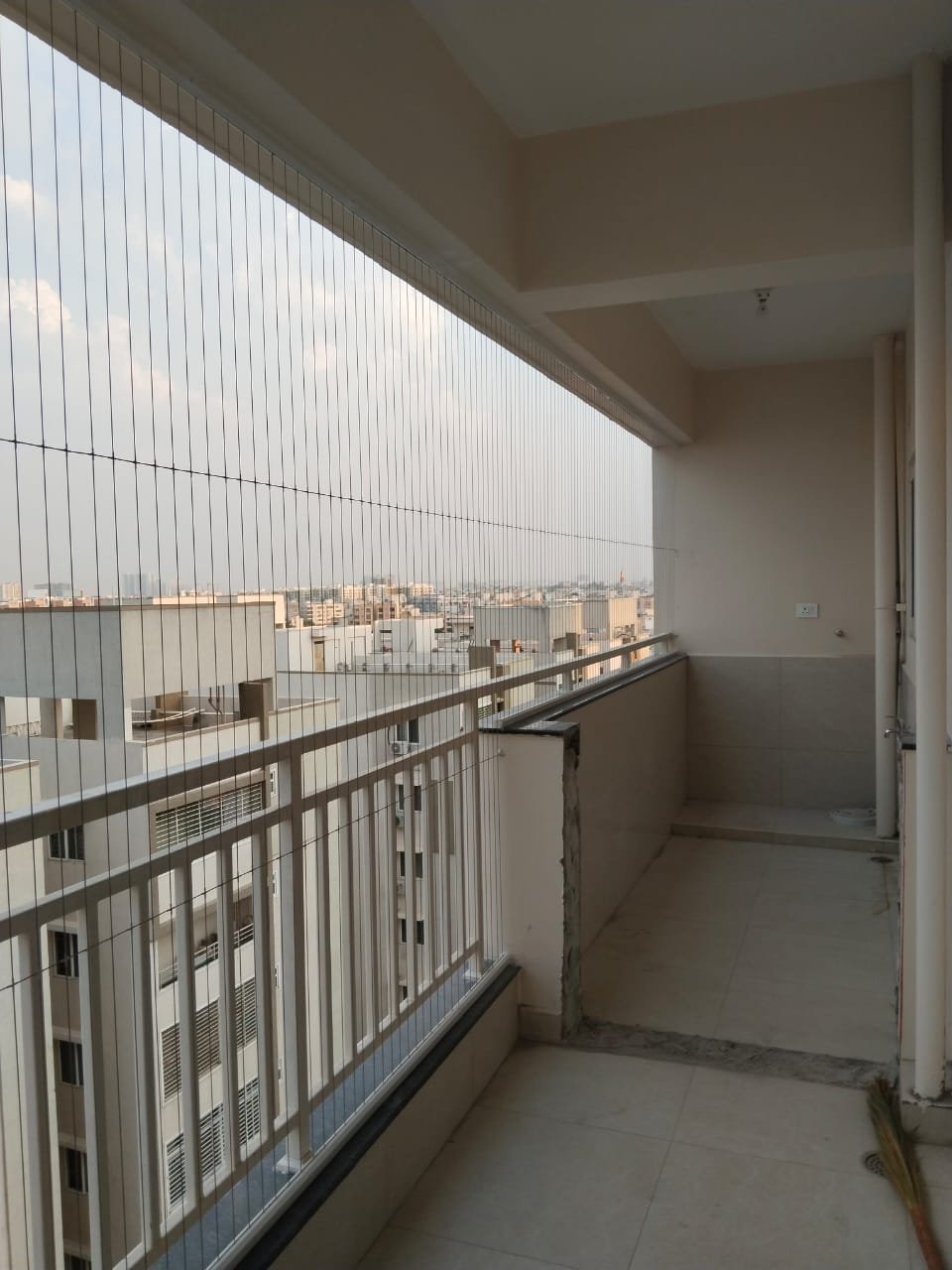
Balcony Bird Netting Pune Installation
3. Visual & reflective deterrents
Reflective surfaces and movement create discomfort for pigeons:
- Hang old CDs/DVDs or reflective ribbons.
- Use spinning décor, wind chimes, or pinwheels to create motion.
- Change placement occasionally so pigeons don’t habituate to a single object.
4. Natural scents pigeons dislike
Use natural smells on cotton balls or in small dishes:
- Peppermint oil, clove oil, or crushed garlic.
- Lemon peels or cinnamon sticks in corners and near eaves.
- Replace or refresh scents often—after rain or 5–7 days.
5. Plants that help deter pigeons
Choose plants that are low-maintenance and give an unpleasant surface or scent to pigeons:
Aloe Vera
Thick, spiky leaves make resting uncomfortable.
Peppermint
Strong scent pigeons dislike; also easy to grow in pots.
Cactus & succulents
Spines prevent landing and make ledges unattractive.
Tulsi (Holy Basil)
Commonly grown in Indian balconies and acts as a mild repellent.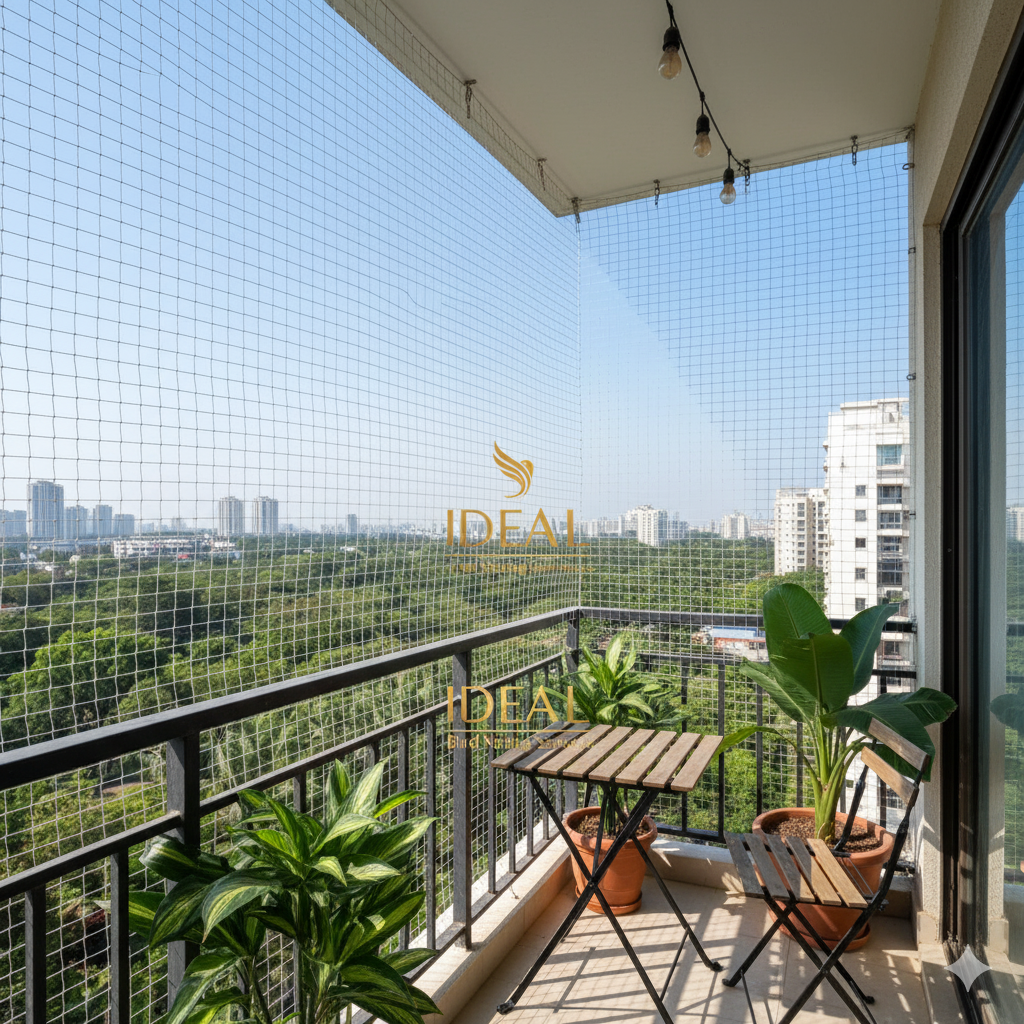
6. Humane anti-roosting options (soft spikes & barriers)
Use non-lethal barriers to prevent landing:
- Plastic or eco-friendly bird spikes (rounded, blunt tips).
- Bamboo skewers or thin wooden dowels for temporary blocking.
- Transparent nylon fishing lines or jute thread across ledges.
7. Visual decoys & movement
Predator decoys can work for a short time. Rotate and reposition them weekly:
- Plastic owls or hawk silhouettes.
- Rubber snakes for balconies with low foot traffic.
- Move decoys occasionally so pigeons don’t learn they are fake.
8. Natural sound deterrents
Subtle sound-based methods that are neighbor-friendly:
- Wind chimes, bamboo chimes, or small bells.
- Water features with a gentle drip can discourage roosting.
9. Bird Netting — best humane permanent solution
Bird netting is the most reliable way to completely keep pigeons off a balcony. It creates a physical, humane barrier so pigeons cannot land, roost or nest.
Benefits of bird netting
- Permanent and low-maintenance once installed.
- Transparent options preserve views.
- Completely humane — prevents contact without injury.
- Works for all building heights and balcony shapes.
Installation tips
- Measure your balcony accurately (height, width, and depth).
- Choose UV-stabilized netting for long life (4–8 years typical).
- Hire a reputable installer for a clean fit and secure anchors.
- Consider removable panels if you need occasional access (plants, window cleaning).
10. Mistakes to avoid
- Avoid poison, sticky gels or traps that injure birds — these are inhumane and often illegal.
- Don’t remove active nests until chicks have fledged; check local wildlife laws.
- Don’t create hiding places where pigeons can become trapped inside netted areas.
11. A simple 3-step plan to pigeon-proof your balcony
- Eliminate food & clean: Remove attractants and sanitize surfaces.
- Install soft barriers: Temporary spikes, fishing line, or plants.
- Install bird netting: For a permanent, safe solution.
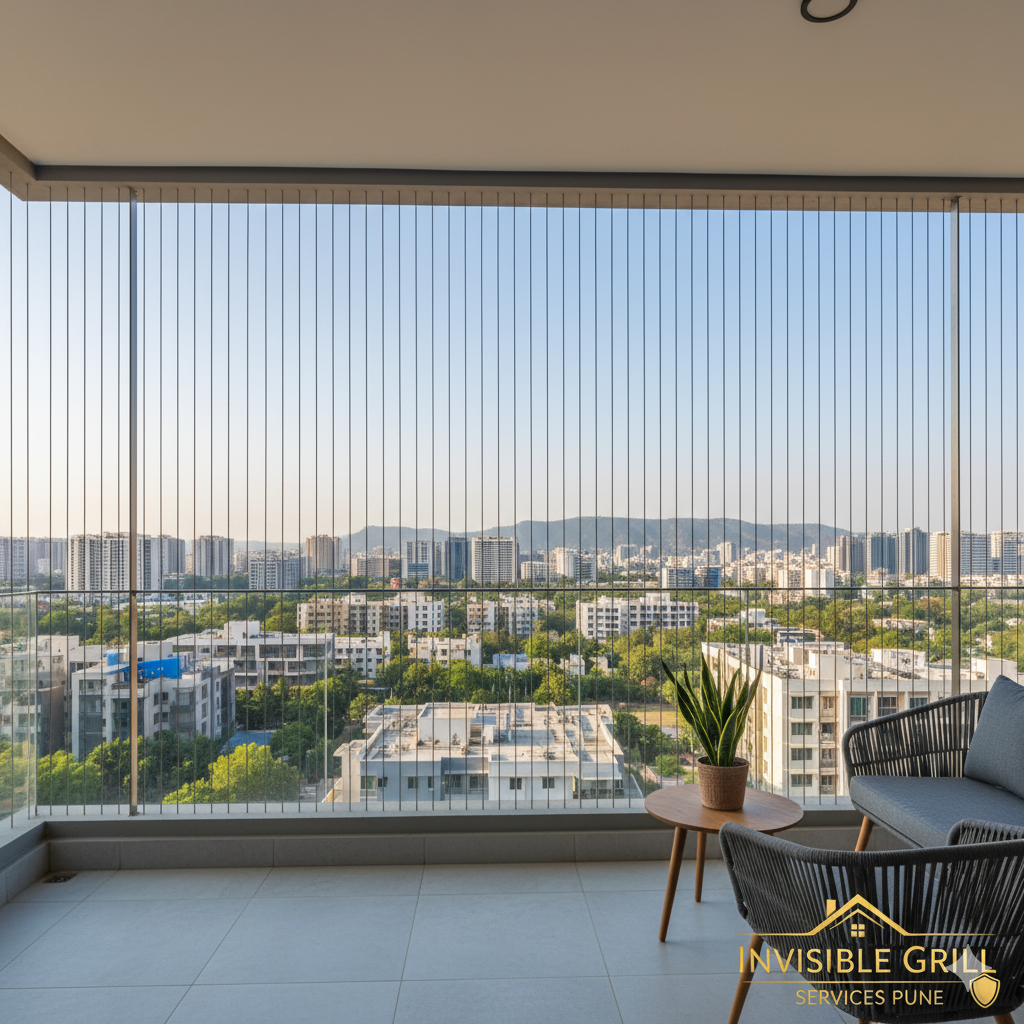
Balcony with invisible grill installed for safety and clear view in Pune apartment.
Frequently Asked Questions (FAQ)
- Is bird netting safe for pigeons?
- Yes. Properly installed UV-stabilized netting prevents birds from landing or nesting without injuring them.
- How long does bird netting last?
- Good quality, UV-treated netting typically lasts 4–8 years depending on sun exposure and maintenance.
- Will reflective tape alone solve the problem?
- Reflective tape helps but pigeons can habituate. Combine tape with other strategies, and use bird netting for permanent control.
- Are there any legal issues with removing nests?
- Local wildlife laws vary. Don’t remove active nests until chicks have fledged — check local regulations if unsure.
Need help with bird netting installation?
We can create a free measurement checklist or provide an installation estimate. Bird netting is the recommended humane, long-term solution.
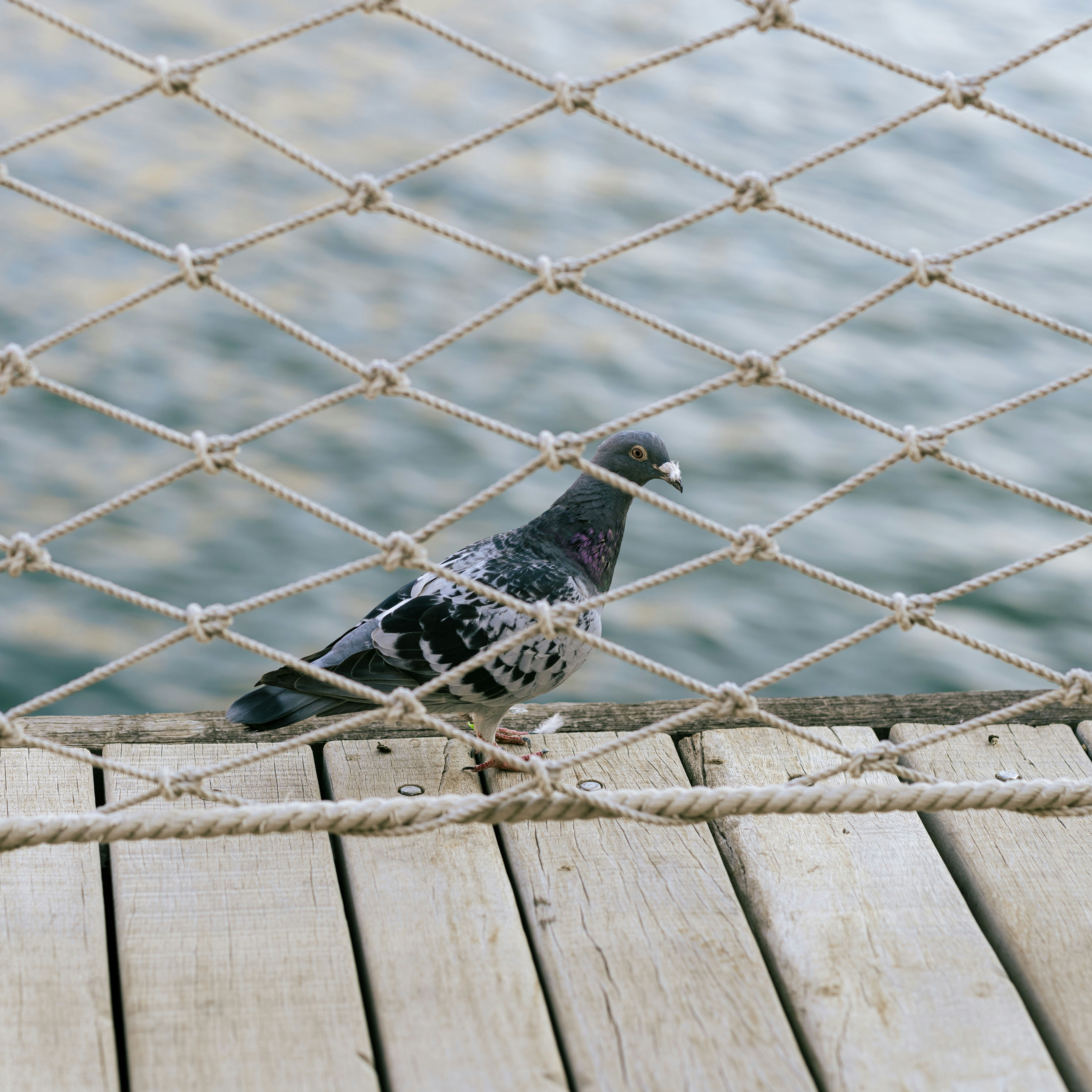
Understanding the Pigeon Problem
Pigeons are often viewed as charming urban dwellers, but their presence can lead to significant issues, especially in residential areas. One primary reason pigeons are attracted to balconies is the availability of food sources. Many apartment dwellers inadvertently create a feeding environment by leaving out scraps or birdseed, which draws these birds in. Additionally, the sheltered structure of balconies offers pigeons a safe space for roosting and nesting, making them appealing spots for these birds to settle.
The potential problems posed by pigeons extend beyond simple aesthetic concerns. Pigeons are known to produce large quantities of droppings, which can create unsightly messes and potentially damage property. Their droppings are acidic and, over time, can corrode building materials, leading to costly repairs. Furthermore, the presence of pigeons can contribute to an increase in noise levels due to their cooing and interactions with other birds, disrupting the peace in residential environments.
Understanding pigeon behavior is crucial to addressing the issues they create. Pigeons are social birds that tend to nest in colonies, which means that when one bird finds a suitable spot, others will likely follow. Their nesting behavior often includes the use of various materials such as twigs, paper, and fabric, which can contribute further to the mess on balconies. Recognizing these attributes of pigeons highlights the importance of finding effective measures to deter them.
Given their adaptability and tendency to return to familiar roosting sites, it becomes necessary to implement a proactive strategy, such as utilizing bird netting. This method not only helps to keep balconies free from pigeons but also minimizes the disruption to residential life caused by their presence. A thorough understanding of the pigeon problem can thus inform the selection of appropriate solutions for a more serene living environment.
Benefits of Using Bird Netting
Bird netting serves as an effective and humane solution for deterring pigeons and other birds from invading your apartment balcony. One of the standout advantages of bird netting is its non-lethal nature. Unlike traps or poisons that pose risks to wildlife and the environment, bird netting acts as a barrier, ensuring that pigeons remain at bay without causing harm. This approach aligns with eco-friendly practices aimed at preserving biodiversity and protecting avian species.
Furthermore, bird netting is an environmentally resilient option. It is made from durable materials that can withstand a variety of weather conditions, such as wind, rain, and UV exposure. This durability allows for long-term use, making it a cost-effective investment in your home’s maintenance. Unlike other deterrent methods that may need frequent replacements or reapplications, bird netting offers a robust solution, reducing the need for ongoing interventions.
In addition to being environmentally friendly and effective, bird netting also provides a more aesthetically pleasing means of preventing unwanted bird access. When installed correctly, it can be discreet and blend seamlessly with your balcony design. This aspect is particularly important for apartment dwellers who may wish to maintain an appealing view while ensuring their outdoor space is free from the inconveniences associated with pigeon droppings and nesting behaviors.
Moreover, by choosing bird netting, you establish a proactive stance in countering pigeons and other birds before they become a significant problem. This long-term solution not only helps to keep your balcony clean but also mitigates potential health risks associated with bird droppings. Overall, the advantages of bird netting make it a compelling choice for those seeking a natural method to prevent pigeons from trespassing on their private spaces.
Choosing the Right Bird Netting
When selecting the most appropriate bird netting to keep pigeons away from your apartment balcony, several factors must be considered to ensure efficacy and longevity. The market offers a variety of netting materials, with nylon and polyethylene being the most common choices. Nylon is recognized for its strength, flexibility, and UV resistance, making it a suitable option for residential balconies exposed to harsh weather conditions. Conversely, polyethylene is lightweight, more cost-effective, and also offers good resistance to the elements, although it may not be as durable as nylon.
The mesh size of the bird netting is another critical factor. For effective pigeon deterrence, the ideal mesh size is around 1 inch. This size is small enough to prevent pigeons from infiltrating your balcony while still allowing air and light to pass through. Larger mesh sizes might not be as effective, as pigeons could easily squeeze through and establish themselves on your space.
Durability plays a significant role in the selection process. It is advisable to opt for netting that comes with a warranty or guarantee, indicating its reliability over time. Check for features like reinforced edges, which can enhance the netting’s lifespan, especially in areas prone to strong winds or heavy rains.
Weather resistance is equally essential; choose bird netting that can withstand various climate conditions without degrading. Products rated for outdoor use generally offer better performance when it comes to UV rays and moisture protection. By carefully evaluating the netting material, mesh size, durability, and weather resistance, you can select the best bird netting to naturally deter pigeons from your apartment balcony, ensuring a peaceful outdoor space.
Gathering Necessary Tools and Materials
Before embarking on the task of installing bird netting to keep pigeons away from your apartment balcony, it is essential to gather the necessary tools and materials. Having the right items on hand will facilitate a smoother installation process and enhance safety.
Your primary tool requirement begins with a pair of sturdy scissors, which will be utilized to cut the bird netting to the desired size. Ensure that the scissors are sharp to make clean cuts, allowing for a precise fit around your balcony. In addition to scissors, a measuring tape is crucial for accurately measuring the dimensions of your balcony, ensuring the netting adequately covers the area where pigeons are likely to perch.
To secure the netting, you will need anchors, zip ties, and mounts. Anchors help in firmly attaching the netting to the balcony structure, providing stability against wind and other environmental factors. Opt for corrosion-resistant anchors to ensure longevity, especially if your balcony is exposed to elements. Zip ties are essential for connecting the netting to the mounts, which will be affixed to the balcony itself. Make sure to choose heavy-duty zip ties that can withstand wear over time.
Safety gear should not be overlooked when preparing for installation. A sturdy pair of gloves protects your hands from cuts or abrasions while handling the netting and sharp tools. Additionally, wearing safety goggles is advisable to shield your eyes from any debris while cutting or securing the netting. If you will be working at heights or using a ladder, consider wearing a hard hat for extra protection.
By gathering these essential tools and materials, you will set yourself up for a successful and safe installation process, effectively minimizing the chances of pigeon intrusion around your apartment balcony.
Preparing Your Balcony for Installation
Before installing bird netting to keep pigeons away from your apartment balcony, proper preparation of the area is essential to ensure its effectiveness and longevity. The first step in this process is to thoroughly clean the balcony. This involves removing any debris, such as dirt, leaves, and leftover materials that may attract pigeons or other birds. A clean space not only deters birds, but also allows for a better inspection of the balcony layout.
Following the cleaning, it is crucial to check for any existing pigeon nests or droppings. If you find nests, it’s important to remove them carefully, as they may be protected by local wildlife regulations. It is advisable to consult local wildlife authorities about the appropriate procedures before taking action. In addition, the removal of droppings is necessary for hygiene purposes and will help diminish the scent that may attract more pigeons.
Once you have cleared the balcony of potential attractants, the next step is to assess its layout. Take note of possible entry points, such as ledges, gaps, or edges where pigeons might find their way onto your balcony. Understanding these areas will guide you in deciding the most effective placement of the bird netting. Ideally, the netting should cover all entry points to create an effective barrier against pigeons. You may also want to consider the height and angle of your balcony railing and other structural elements, as these can impact how the netting will be attached.
In conclusion, preparing your balcony for the installation of bird netting is a vital step. By ensuring a clean environment, removing existing nests and droppings, and evaluating the layout and entry points, you create a solid foundation for successfully keeping pigeons away from your outdoor space.
Step-by-Step Installation of Bird Netting
Effectively installing bird netting is vital for maintaining a pigeon-free apartment balcony. The following steps will guide you through the process to ensure complete coverage and deter any potential bird intruders. Begin by measuring the dimensions of your balcony. This includes the length and height of all sides where the netting will be attached. Use a tape measure to get accurate measurements, and jot them down to determine how much netting you will need.
Once you have gathered your measurements, purchase a suitable bird netting material. Choose a durable, UV-resistant netting designed specifically for bird exclusion, as this will provide longevity and efficiency. After acquiring the netting, lay it out on a flat surface and cut it to match the dimensions you recorded earlier, ensuring that it is slightly larger than your measurements for optimal coverage.
Next, securing the netting properly is critical. Begin by attaching one side of the netting to the balcony railing or wall using anchor points, such as screws or zip ties, depending on the material of your balcony. Make sure the netting is taut to prevent any sagging, which could create openings for pigeons and other birds. Repeat this step for each side of the balcony, ensuring all edges are tightly secured and free of gaps.
After the netting is installed, conduct a thorough inspection for any potential entry points. Walk around the perimeter to confirm that no areas allow space for birds to enter. It may be beneficial to take a step back and assess the installation visually. Monitoring the netting regularly is also important to check for signs of wear or gaps that may develop over time, allowing pigeons to intrude.
Maintenance Tips for Your Bird Netting
Proper maintenance of bird netting is essential to ensure its longevity and effectiveness in deterring pigeons from your apartment balcony. Regular inspections, cleaning, and timely repairs will help maintain the integrity of the netting against environmental influences and wear and tear.
Initially, it is advisable to conduct periodic checks of the bird netting, ideally every few months, especially after harsh weather conditions. Such inspections can help identify any visible signs of damage, such as tears, holes, or sagging areas. It is essential to address these issues promptly; even small gaps can become entry points for birds, potentially undermining the netting’s purpose.
Additionally, cleaning the netting is a crucial part of its maintenance. Debris, leaves, and other organic materials can accumulate on the netting over time, potentially causing blockages or creating a habitat for pests. By using a soft brush or hose, you can safely remove any lingering debris without damaging the netting. It is important to clean the netting periodically, particularly in areas with heavy foliage or when seasonal changes may lead to increased debris buildup.
In the event that damage occurs, it is vital to make necessary repairs as soon as possible. Most bird netting is designed with durability in mind; however, if you discover a problem, using a patching kit or replacement pieces can effectively seal any gaps. For extensive damage, consider consulting the manufacturer or a professional service specializing in bird control solutions. Maintaining the bird netting will ensure it remains a reliable barrier against pigeons, thereby offering you peace of mind and uninterrupted enjoyment of your balcony.
Alternative Natural Methods to Deter Pigeons
While bird netting is an effective way to keep pigeons away from your apartment balcony, it is beneficial to complement it with additional natural deterrent methods. Implementing a variety of techniques not only enhances the overall protection but also discourages pigeons from nesting or roosting in the vicinity. One of the simplest methods is the use of reflective materials. Shiny surfaces can create a visual disturbance for pigeons, making your balcony less appealing. Items such as aluminum foil strips, reflective tape, or old CDs hung strategically can help achieve this effect.
Another effective approach involves the installation of bird spikes. These spikes, which are designed to prevent birds from landing, can be placed on ledges, railings, and other flat surfaces on your balcony. While these spikes are primarily physical barriers, they do not harm the birds and serve as a humane way to deter pigeons. The presence of these spikes effectively communicates to the birds that landing is not viable, leading them to seek alternative locations.
Utilizing sounds or smells that repel pigeons is also worth considering. For acoustic deterrents, devices that mimic predator calls can be employed, discouraging pigeons through their natural instincts. Additionally, certain smells, such as those derived from predators or citrus scents, can be an effective deterrent. While commercial products are available, creating your own natural solutions from essential oils may offer a more environmentally friendly choice. Regularly refreshing these scents can maintain their effectiveness. Implementing these methods alongside bird netting will provide a multifaceted approach to keeping your balcony free of unwanted pigeons. By combining visual distractions, physical barriers, and sensory repellents, you can cultivate an environment that is unwelcoming to these birds.
Conclusion: Enjoying a Pigeon-Free Balcony
In summary, maintaining a pigeon-free balcony is essential for enhancing the enjoyment and cleanliness of your outdoor space. Throughout this guide, we have explored natural methods to deter pigeons effectively, emphasizing the importance of implementing bird netting as a primary solution. By utilizing bird netting, you can create a barrier that not only prevents pigeons from accessing your balcony but also supports an aesthetically pleasing environment.
Additionally, we discussed several complementary strategies to further discourage pigeon activity. These include the use of deterrents such as reflective surfaces, noise-making devices, and fragrance repellents that can create an unwelcoming atmosphere for these birds. Such methods, when combined with bird netting, can significantly improve your success in keeping pigeons at bay.
Emphasizing a proactive approach, it is important to remember that early intervention is key. By recognizing the signs of a pigeon problem and taking action promptly, you can prevent the situation from escalating. Creating a pigeon-free environment not only enhances the comfort of your balcony but also safeguards the integrity of your living space from potential damage caused by droppings and nesting.
We encourage you to implement the techniques detailed in this guide to reclaim your outdoor area. A clean and serene balcony not only enhances your personal enjoyment but also offers a welcoming space for relaxation and socialization. With simple and effective measures, you can successfully keep pigeons away, allowing you to fully appreciate your balcony without the disturbances that come with unwanted visitors.